

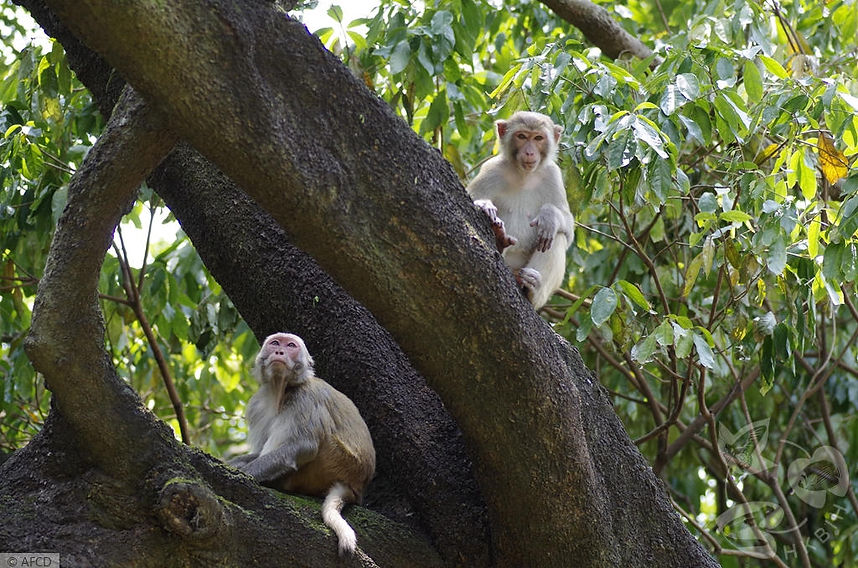
Macaque
Macaca mulatta & Macaca fascicularis
Species Overview
Macaques are culturally significant to Hong Kong's diverse wildlife, with two prominent species inhabiting areas of the city. They are commonly known as Rhesus Macaques and Long-tailed Macaques. They play a significant role in the local ecosystem and are often encountered in their respective natural habitats in Hong Kong.
The Rhesus Macaque is an intelligent and adaptable primate, known for their distinctive facial features and rigid hierarchical social structure. Their diet consists of a variety of foods, including fruits, leaves, and insects, making them resourceful foragers suited to a range of habitats. They are also known to inhabit other urban areas across South-East Asia.
The Long-tailed Macaques also call Hong Kong home. These agile and inquisitive primates are distinguished by their longer tails and acrobatic abilities, often navigating through the tree canopy. They interact in more fluid social structures and are well suited to forested environments, often preferring to be close to a water source. They differ in diet, sometimes referred to as Crab-eating Macaques.
Both species contribute to the ecological balance of Hong Kong's natural environment, playing roles in seed dispersal, vegetation management, and ecosystem dynamics. As intelligent and social animals, macaques exhibit complex behaviours that reflect their adaptability to the ever-changing landscapes of Hong Kong.
Species Distribution
The map shows the species distribution of Rhesus Macaques in Hong Kong since 2024. Long-tailed Macaques are found predominantly in Kam Shan Country Park. The Hong Kong Biodiversity Information Hub's (HKBIH), Biodiversity Graphic Information System illustrates the spread of species in Hong Kong and can be used by clicking the image.

Image Source: Hong Kong Biodiversity Information Hub
Do's
-
Observe from a safe distance to avoid causing stress or provoking the primates through any aggressive behaviuor.
-
Respect their space and avoid approaching or attempting to touch the macaques.
-
Stay calm and move slowly to prevent startling the animals.
-
Dispose of food and waste properly in designated collection bins to discourage macaques from approaching high traffic human areas.
-
Report any injured or distressed macaques to wildlife authorities and ensure to use Encountering Wildlife HK's community feedback form to report any interactions.

Dont's
-
Do not feed the macaques as it can lead to dependency on humans as a food source, altering their natural foraging behaviours, and pose potential health risks to people and macaques alike.
-
Avoid making direct eye contact, as it can potentially be perceived as a threat by macaques.
-
Do not carry or display food items openly in the presence of macaques.
-
Refrain from making loud noises or sudden movements that could startle or agitate.
-
Never attempt to capture, handle, or interact closely with wild macaques.
Challenges
Encountering these fascinating primates in the wild can be a memorable experience, but it is important to observe them from a respectful distance making sure not to be potentially stress inducing. At Encountering Wildlife HK, we acknowledge that addressing the issue of feeding wildlife is multifaceted, as individuals may have varying reasons for engaging with wildlife in this way. However, our focus is on ensuring that comprehensive information is accessible and readily available. As a result, refrain from feeding or interacting with macaques to ensure their well-being and natural behaviours are preserved. By appreciating and respecting the presence of macaques in Hong Kong, we can contribute to the conservation and protection of these species for generations to come.