


Wild Snakes
Overview
Hong Kong is home to 46 different snake species. Out of the 46 land snakes, 14 species are venomous, with 8 capable of inflicting fatal bites. Despite its urban landscape, Hong Kong’s diverse habitats—including forests, wetlands, and coastal areas—provide a suitable environment for these reptiles. Snakes play a vital role in controlling rodent populations and maintaining ecological balance. While most species are non-venomous and avoid human interaction, encounters can occur, particularly in rural areas or near hiking trails. Keep reading to learn about some commonly found snake species you might run into on your next hike, along with guidelines on what to do if you encounter them!
Venomous
Snakes


Venomous
Snakes
Venomous
Snakes
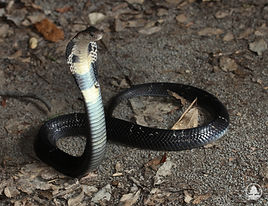
Chinese Cobra (Naja atra) – One of Hong Kong’s most well-known venomous snakes, often found in open fields or near village areas; raises its hood when threatened.
Many-banded Krait (Bungarus multicinctus) – A highly venomous snake with distinctive black-and-white bands, usually nocturnal and shy, preferring to avoid humans.
Bamboo Pit Viper (Trimeresurus albolabris) – A green, tree-dwelling snake commonly found in forested trails; can be aggressive if disturbed.
Photo credits: AFCD
Non-Venomous
Snakes

Greater Green Snake (Cyclophiops major) – A bright green, slender snake that is completely harmless and often mistaken for venomous species.

Burmese Python (Python bivittatus) – Hong Kong’s largest snake, sometimes seen near water sources or in dense vegetation; non-venomous but can grow over 3 meters long.

Oriental Rat Snake (Ptyas mucosa) – A large, fast-moving snake often seen in wooded areas and grasslands; harmless but may act defensively if cornered.
Non-Venomous
Snakes
Photo credits: Adam Francis (HKSnakeID)
What do I do if I see a wild snake?
According to the Hong Kong AFCD, catching or handling wild snakes is not recommended. Please call the Police’s hotline 999 immediately for ambulance service in the event of a snake bite, or you may call the Police hotline 999 if you encounter a snake in your home.
Additionally, this comprehensive guide sourced from the Hong Kong Snakes Facebook Group will help you deal with snake encounters in different situations. You may also join their group to learn more about snakes in Hong Kong and view pictures of user-submitted snake encounters:
RECOMMENDED PROCESS IN THE EVENT OF FINDING A SNAKE:
1) Snake in the wild: give it space, take a photo and leave it to get on with its day.
2) Snake in your garden (venomous): decide whether the snake really is an issue. Most snakes will leave the area (if not trapped). You could be cautious for the next few days (especially at night and with lifting objects that could be hiding spots).
3) Snake in your garden (non-venomous): unless it is a very large Python, there is no reason to move it (unless the snake is at risk itself).
4) Snake in your house (non-venomous): if you feel safe in doing so, get a photo, get it identified (this will help you plan next step). If you can confirm it as a non-venomous species, and not too big (and you feel comfortable doing so), you can try to remove it yourself. Use a bathroom towel to grab it and stuff the whole thing into a bag (only if you have 100% had it identified as non-venomous).
5) Snake in your house (venomous): you should call the police (either your local station or 999). They should NOT kill the snake, you can tell them that you will complain to their station. Video them and use for a follow up complaint. All snakes caught by the government snake catcher are handed over to the police who then hand to Kadoorie farm for processing/release.
Please remember, that any snakes that are moved far from their surroundings, will be put at a disadvantage in terms of survival.